
Your Garden Can Be a Reflection of Your Soul
Houston Tribune March 2004
Bridgette Mongeon © 2004
Visitors who come by my home often comment on my garden. “Lovely, it is an oasis in the middle of the city.” I just smile and feel a warm nurturing feeling accompanied with a quiet excitement.
There once was a day when my garden oasis was only a dream. My surroundings seemed void, dry and sparse. It was, in fact, a reflection of what I was feeling inside of me at that time. Our gardens can be a reflection of our souls. “I’ll change it all.” I said to myself one day.
“I’ll change the outside and it will help change what is within me.” So I sat on a patch of grass and dreamt of a garden. Then I took a shovel and began turning over dirt, and then more dirt. A friend came to visit me and asked what I was doing, panting a bit, still digging, I answered “Building my dream garden.” There was row after row of turned dirt, and not one plant to plant in them. It didn¹t matter; the important thing was to act upon my dreams.
It was apparent more soil was needed. However as a single mom there was very little expendable income. In this journey of discovering my garden and myself I found that just as I would put forth the effort and get to a certain point where there was a need, somehow what was needed appeared. It may also have been due to the fact that I looked at life more creatively, less confining, and with more possibility.
Just down the street the city was digging out drainage ditches. I mustered up the courage to ask the driver if I could have some of the soil, ” Sure he said, give me the address.” Soon I had raised flowerbeds everywhere. One last load of dirt was dumped in the driveway. I wish I had gotten up into that last truck to take a look, because this time I did not receive fine soil instead he deposited a large truckload of hard clay.
There were many beautifully raised beds all around my yard, and one huge pile of gumbo in my driveway. The beds sat empty for a while. It is inevitable if you don¹t plant anything in those flowerbeds, no matter how prepared they are; they will soon be overcome with weeds. And if dreams are not acted upon and then you lose momentum, the stagnation will be felt, along with discouragement.
I did not find the dirt I needed until I was ready for it, and had gone through the effort to turn my soil. Now that my beds were turned over for the second time I made myself ready for plants. While walking in the neighborhood I admired a neighbors yard. ” Fine garden,” I said. “If you ever need assistance I would love to lend a hand in your yard in exchange for some of your plants.” “No need to help, take as much as you want, I¹m moving.” Was his reply. So weekend after weekend I loaded the trunk of my car with plants. My trunk hauled so many plants, dirt breaking free from their roots in travel, that soon things began to grow inside my car.
I had Cannas , Split Leaf Philodendrons, edging plants and many other things that I didn’t even know the names of. At one point I estimated I had over $1,000 worth of plants. I planted my treasures with quite a bit of distance between them. For two reasons, the first was that I wanted it to look like I had more than I had, and the other was because I knew that after a time things would grow and eventually fill in. It is the same way with dreams that are acted upon; they grow and fill in the sparse areas of our lives.
Once I began to act upon my dream garden I became more aware of other peoples gardens. I noticed that many people had gardens that needed thinning. Each time I would receive plants from another gardener there was this unspoken respect for another dreamer and the honor of sharing in a part of their dream. In no time at all my entire yard was lush with bushes, flowers and plants.
Remember that big pile of gumbo? I painstakingly moved it to the back yard. Another friend came over and said “Your yard is looking pretty good accept this pile of dirt here”. I could hardly believe it. I said “Is that what you see?” I had spent so much time visualizing my dream garden that I thought everyone could see it the way that I did.
That evening I got an old piece of wood and some paint. I made two signs and put one on top of the pile of dirt and another further in the yard. The first said, “Visualize a waterfall here” and another said, “Visualize a stream here.”
It took over 10 years, and my paradise is still a work in progress. The waterfall is not complete, but the sign has been removed and in its place are two ponds. The stream does run into a lower pond just where I visualized it, under the footbridge that my husband and son made. The sandy beach with Adirondack chairs was never in my original dream but was added as I went along.
When I was a little girl my fondest memories were along the streams of the Allegheny Mountains. There are no mountains just north of the Heights in Houston, but the adventure and wonder I feel as I take my shoes and socks off and play in the stream is just as rejuvenating as when I was a child.
Over the years my garden has changed. My dream garden was not the only thing that was nurtured; I nurtured my own dreams. As they both grew I became inspired. I watched provision come when needed, spurred by my own actions. This taught me to work hard and to depend on God- faith. It all started with a dream and my willingness to act upon those dreams and with a little time life grew sweet, filling everything in.
Bridgette Mongeon is a sculptor, writer and avid gardener residing in the Heights.
All written work is copyrighted and cannot be used, whole or impart,
without the written consent of the author.
Acknowledging the Huge Polka Dotted Pink Elephants
Houston Tribune. February © 2004
by Bridgette Mongeon
When I was a girl, we had this huge polka dotted pink elephant that took residence directly in the middle of our living room. Now even though this elephant was annoying and affecting the view of each other, we never talked about it. It affected everyone in our home, but no one dared speak of it. Each of us, my brother, my sister, my dad, and myself arranged our lives around the pesky pachyderm. I am not sure why conversations about its presence were an unspoken taboo, but everyone knew that it was. Because of the shame that was brought on by this bothersome boarder, the members of our home rarely, if ever, invited anyone to our house, and when we did, we each had our own set of excuses to distract the visitor and to explain it away.
It has been a long time since I had thought about that elephant, almost 30 years. The memory of it was brought back to me by my interaction with a very young courageous girl of 13. My girlfriend’s granddaughter, Brandey, was embarking on the acknowledgment of her own huge polka dotted pink elephant that was resides in her home. I was just her age when I too began to acknowledge my own elephant. I discovered that many other kids my age were experiencing the same thing. You see this taboo subject and huge obstacle that sat between all my family members was brought on by a disease that gripped the family – Alcoholism. My mother was an alcoholic.
Alcoholism is a disease. It is a disease that affects the entire family. Even though it affects everyone, no one talks about it; it was like a huge polka dotted pink elephant sitting right in the middle of our living room.
I remember how wonderful it felt, so many years ago, listening to other kids who revealed their own stories. In their experiences, I could see my own life. The shame, fear, desperation, and hopelessness were replaced with understanding, action, and hope. Finally I found a place where others not only had huge pink polka dotted elephants, but they were also willing to talk about them. This place of such enlightenment was called Alateen.
Alateen taught me that I was powerless over the elephant, the alcohol, and my mom’s drinking. I· couldn’t make mom sober, but I could help myself. Her drinking wasn’t my fault. I learned how to cope with my problems and build a life filled with hope.
A teenager who had a father that was an Alcoholic developed the program of “Alateen in 1957. The Alateen program is patterned after Alcoholics Anonymous (AA). AA has had great success with helping alcoholics obtain sobriety. Alanon was developed for spouses or family members of the alcoholic and. Alateen developed for the teenagers. All of these programs have helped many family members to understand their family disease. Since attending Alateen 30 years ago Pre-Alateen has also come into existence. The motto for all of these branches of AA is “It works for you if you work the program.”
I found a local Alateen meeting for Brandey. There we both met Brittany, a most impressive young lady who shared her experiences with Brandey. I know the two of them had an instant rapport. How could they not, they were both the owners of huge polka dotted pink elephants. Brittany 13 and her younger brother 12 have both been “working the program” for 8 years.
I marveled at the grandmother who religiously took these kids to meetings. I don’t know if anyone can possibly know the long-range effect that this can have on children. You see, when one becomes emotionally healthy, it opens your life to all possibilities. And, research has proven that children with alcoholic parents have a greater chance of becoming alcoholics themselves.
This mental health help and Alateen may save their lives’ I believe it saved mine. So if you are a relative of a teen who may need help, please take the initiative to help in finding and driving these kids to meetings.
If you are not sure if there is an elephant in your home Alateen has put together a list of questions. It can be found at http://www.al-anon.org/ twentyquestions.html. There is a similar list for those wondering if Alanon is for them.
Let me assure you there is hope. My mother has been sober for 30 years. What alcoholism robbed from us in my early years has been restored a hundred fold. She has grown into a woman that I not only admire, but also deeply respect!
If you would like to talk to someone about your huge polka dotted pink elephant you can find meetings in your area by calling 713-683-7227 or searching the local Alanon web site located at http://www.hal¬pc.org/ alanontx/. Let me encourage you to keep trying the contact.numbers. Don’t give up, if one does not work encourage people to give you another, or go to the next on the list. You might also want to call the numbers in off-hours. Some people may only answer the phones before and after meetings, just before 7:30 p.m. or after 9:00 p.m.
If your elephant goes by another color or name, there are many different organizations that are helping individuals with all sorts of problems like; low self-esteem, gambling, sex addiction, drug addiction, and many others. All of these programs are patterned after AA, and have proven to be highly effective. I have found a list of them located at http://www.council-houston.org/recovery.htm. Once again be persistent in calling and in seeking help.
All of the programs are free and many offer free literature. With a little work you not only will be able to recognize your huge polka dotted pink elephant, but you will soon be able to function better, feel healthier, and see your family members a little clearer in your life and from across the living room.
Bridgette Mongeon is a writer and artist who lives in the Heights area www.creativesculpture.com
All written work is copyrighted and cannot be used, whole or impart,
without the written consent of the author.
A Life Remembered Helps Six Children Go Mad Over Art
Tribune July 2003
Bridgette Mongeon © 2003
The excitement on the children’s faces at the Mad Hatters Art Camp was enough to inspire any writer. The enthusiasm of the six special participants was especially delightful.
Nicholas Orozco, Chelsea Valles, Daniel Duron, Ever Reyes, Faith Pruneda, and Rosa Juarez, were all winners of the Ellen O’Neal Art Scholarship.
Each child, encouraged by Harvard Elementary’s art teacher Mr. Robertson, submitted art work in hopes of winning the competition, and the award of the $300 tuition for the two weeks at The Mad Hatters Arts Camp.
The Ellen O’Neal Art Scholarship was developed by Jazzercize instructor Jane Luco and attorney Beatrice Mladenka-Fowler. Both women are friends of Jo Ellen Snow the mother of Ellen O’ Neal. Ellen O Neal was a vivacious artist who attended kindergarten and first grade at Harvard Elementary. She was also a student of artist Naomi Smulian, an art teacher at Mad Hatters Art Camp, and one of the camps founders.
Ellen never did get the opportunity to attend Mad Hatters Art Camp; she lost her battle with a brain cancer while attending Harvard Elementary. Both Luco and Mladenka-Fowler felt it was important to contribute to Ellen’s memory and created the Ellen O’Neal Art Scholarship. Teachers at Harvard Elementary determine who is eligible. The scholarship is based on financial need, artistic talent, good citizenship and a commitment from the parents concerning transportation.
“I’m very, very proud,” states Snow, “I greatly appreciate anything that keeps Ellie’s memory alive, both at Harvard Elementary and in the community.”
This is the third year that the scholarships have been awarded. The first year two scholarships were awarded. The second year the scholarships grew to one child in each age category, kindergarten through fifth grade. Luco and Mladenk-Fowler raise the funds for the scholarship yearly. Luco said her dream would be to send a boy and girl in each grade, funds permitting.
I had a chance to visit the camp and talk to some of the scholarship winners. I was greatly impressed with the quality of the camp and the teachers. They were all professionals in their field, giving the highest quality of instruction. This year’s theme of Around the World with the Mad Hatter also added geography and further education into the mix. The children were each equipped with their passports that were stamped as they traveled with their instructors to such far away places as Barbados, China, Greece and Portugal.
I met with one of the winners, Daniel Duron, in art teacher Cindy De Hart’s class. Daniel was in the Australian room busily working on a paper sculpture while fiddling with his colorful smock. Daniel said the camp was pretty good “you get to go outside and play and I do art and rhythm and music and the drums.” His eyes twinkled as he said drums. I asked him if he knew who Ellen O’Neal was and how he felt about the scholarship “I felt happy when I won, Ellie was a girl who died and loved to paint. She was a great artist. I want to be a great artist like her too.”
I met with Ever Reyes in Greece at the theater class held by Robb Brunson. Ever was a bit older than Daniel and seemed to know why this scholarship came to be. “The girl’s favorite thing was drawing and they did this to remind everyone of her.” Ever was also very expressive when describing his work. “I worked on the art picture all day, I added wallpaper and colored with crayons and then I thought about doing something with dinosaurs, so I made them stripes, then the night sky not really a night sky” I could tell he was really into this painting.
I stopped into two other classes before the last, Rhythm and Movement with Kristie Kiser and Nature Studies by David Petersen. As I talked with each teacher I was impressed with their ability to woo the children into creativity and learning. “It is as much about team work, and critical thinking as it is movement. We are teaching the kids thinking skills, how to be choreographers”, states Kiser. In Mr. Peterson’s class I was enlightened to hear a run down of what they did that day, as the children lined up at the door and handed in their colored paper chameleons. “We looked for grasshoppers to feed the fire belly toad, we looked at the baby caterpillars, and also talked about how our nose has a memory, and that my favorite smell was dill because it reminded me of my grandmothers farm. We also got to look at the butterfly wing under the microscope and name our snails.” I was beginning to wish I had arrived in this class a bit early to take part in some of the adventure and quickly ran to look at the butterfly before running to my next class.
The last class I visited was Terrence Karn’s music room. I arrived before the children and marveled at the 18+ drums lined up in front of chairs, along with two plastic waterbottles, a Rubbermaid container and plastic planters each with their own set of drum sticks. The children didn’t miss a beat in Mr. Karn’s class. I could see why Daniel’s eyes twinkled when talking about Mr. Karn and the drums. Scholarship winner, Chelsea Valles, was enjoying the opportunity of echoing the teacher’s rhythm on a drum.
Even though I did not get to visit all the classes nor meet all the winners, when I left Mad Hatters I felt like I had been on an adventure, and I had only been there a few hours. It must be wonderful to be a kid and have two weeks of this creative experience. For all the participants I am sure it would be a memory that would last a lifetime, and for six special children a life of a little girl that would be remembered.
The Ellen O’Neal Art Scholarship is maintained by the Houston Independent School District. To make a donation please send a check made payable to HISD, and mail to Snow and Whitworth, Attorneys at Law, 1148 Heights Blvd, Houston, Texas 77008.
To receive information about next years Mad Hatters Art Camp contact Claire Smith administrator at 832-618-1120.
All written work is copyrighted and cannot be used, whole or impart,
without the written consent of the author.
Heights Artist Helps Children With Cancer Through Artwork
Houston Tribune December 2002
Bridgette Mongeon © 2002
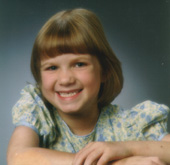
I first heard about Ellie’s artwork from her sister Meagan. One day while driving Meagan home from church, I was discussing the production process of my own sculptures that were packed neatly in a box on the floorboard of my van. “I am familiar with sculpting,” Meagan replied, “My sister’s an artist”. I was intrigued, wondering about her sister’s art. Moments later I was in Meagan’s home and viewing that very artwork. Watercolors were framed and hung with honor in the hallway of their home; colorful animal figurines were corralled on end tables. Stain glass art hung in the window, while reproductions of Ellie’s art sat upon the dining room table. Soon Ellie’s mom, Jo Ellen Snow, and I were enthralled in a conversation about Ellie’s art.
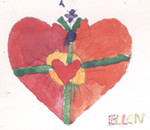
Ellie’s painting titled, “Gift Heart” was first reproduced as gift cards. She felt honored to have her artwork chosen by the MD Anderson Children’s Art Project. A reproduction of an artist’s artwork at any age is quite an accomplishment. It is a tremendous honor when you are only 7 years old. Ellie received a two hundred-dollar honorarium and recognition for her efforts, however, she never would have the opportunity to see the effects and demand that her artwork created. Within a few days of viewing the printed note cards Ellie O’ Neal lost her ferocious fight with a brain tumor that held so tightly to her little body. On January 17, 2001 Ellie passed away. The Children’s Art Project worked diligently to reproduce the jewelry created from Ellie’s art so that family members at Ellie’s funeral could wear it proudly.
Since Ellie’s death, many Height’s residents have honored her. Orange ribbons appeared throughout the Heights. Ellie’s Elm is planted in Donovan Park, in the very spot that she held her third year birthday party, the first birthday party to be held in the then newly built park. Harvard Elementary has a Japanese maple, a bench with painted tiles from her classmates, and a courtyard dedicated in her memory. The street median of Heights Boulevard has a sweet gum tree planted by the Houston Heights Association that was donated by the law firm of Snow and Whitworth, Ellie’s mom’s law firm. “I can see the tree from my window,” states Ellie’s mom. When driving down Heights Boulevard one will notice the tree still has its orange ribbon.
Ellie studied for three years with artist Naomi Smulian at Arts Studio on the Boulevard. Naomi describes Ellie’s artwork as being very sensitive, “Ellie had a calculated sense of design. She loved color and had her favorites,” states Ms. Smulian.
Ellie’s watercolor, “Gift Heart” is now being produced as a Radko Christmas Ornament. Gayle Goodwin, communications director of the Children’s Art Project, states that the ornaments are flying off the shelves. There is discussion of reproducing yet another piece of Ellie’s art for the Children’s Art Project.
“Anytime you buy artwork from the Children’s Art Project, it is a gift that gives twice. All the proceeds from the artwork go to fund the children’s projects at MD Anderson, including the art program,” states Ms. Goodwin. In the 29 years of its existence 15 million dollars has been given back to the program. Ellie certainly has made her mark on the Heights, the art community, and the many children at MD Anderson. Ellie’s “Gift Heart” just keeps on giving.
If you would like to purchase any of Ellie’s artwork or any other artwork from the Children’s Art Program it can be seen at www.childrensart.org or ordered at 1 800-231-1580.
All written work is copyrighted and cannot be used, whole or impart,
without the written consent of the author.
Recovering Your Creative Self
© B. Mongeon 1993
Indigo Sun June 1993
We have heard much about our inner child. Some of us have taken great pains to meet, greet, and love that sometimes lonely, and frightened part of ourselves. Often we have had to search long and hard for that child that has made a constant survival game of hide-and-seek, afraid to come out, and afraid of pain. A part of that same child is our inner creative self, buried deep within, afraid of rejection.
Our misconception of creativity is that creativity is like royal blood – a divine gift bestowed on some and not on others. Or that it is inherited like freckles or red hair. We often look at creative people with awe, and a bit of jealously; however, we are all born creative. We are all born with the same need to know, a desire to formulate, and will to express ourselves. “Every child is an artist,” states Pablo Picasso “The problem is how to remain an artist after growing up.” William Staford writes, “My question is when did other people give up the idea of being a poet? You know when we are kids we make up things, we write, and for me the puzzle is not that some people are still writing, the real question is why did other people stop?”
Hushing the creative self stems from our own fear of rejection, our inherited dysfunctions and our dominant, obtrusive, intellectual left hemisphere. We hear the ghostly voices in our heads – Aunt Ethel stating we could never be a writer with our atrocious spelling. In fear and humiliation we just never tried again. Or the voice of our grandfather stating Uncle Joe was the artist in the family, the talent was not passed down to another. So we packed up our pencil and sketch book, tucked them away with our inner creative child, assured that the genealogy of creativity could never have reached our simple hands.
Recovering our creative self is a decision. Many times students call for classes and I know by the shakiness in their voices that they are afraid, insecure and in need. I know if they got a busy line, or a message was not returned, they might never call again. For some it just took too much effort to call the first time. First time students sometimes explain their artistic experience in those phone calls and some just share a hope of being creative. As in any recovery the first step, however frightening, must be taken.
Those involved in creative recovery also need a sense of support. Safe sources to show artwork to, brainstorm with, and read those first drafts to. It is imperative to find safe places, for the wrong people can set our recovery back. Those who refuse to hear the cries of their own creative child, are not safe sources. They feel extremely threatened by those learning to unleash their creativity, and they often like to manipulate the recovering creative through guilt.
Many times our creative self has been squashed by the rude remarks of adults and on lookers as we were growing up. We fear that rejection so much, the pain of not being accepted, that we often never create again. In our recovery we need to protect that creative self, from others and from ourselves. We must reassure ourselves that renewing our creativity is like learning anything for the first time. We have to allow ourselves some good efforts, and practice, clumsy first drafts, bad poems, and ugly sketches. One women’s fear of the written word was so great she stated, “I am afraid to write because I fear I will write too much, and if I write too much they will laugh, or it will sound dumb.” Her resolution was to not write any words. Her fear was so great and her voices were just too loud.
In writing class I say purge! Write and write – spelling does not matter nor does grammar, in this step of the creative process. If you write too much you can edit later, next week, or next year, but put the thoughts down. Purge with pen and paper until it flows off the paper onto the table and down to the floor. The left hemisphere can revise and organize later but you will at least have something to work with.
Some are so bound by being perfect in their creativity, they feel it is better not to try. To those I say, build a sand castle in the sand. Tomorrow it will be gone. But you will have created and learned, and expressed a part of your self.
This month as a part of discovering your creative self list five things you have always wanted to do. My list changes regularly, and that is okay. I accept that as a part of my life and growth, and not as reason to badger myself with guilt and thoughts of being irresolute. I have accomplished some of my things and because my desires sometimes change, I have given you my most recent list.
- Learn to Tango
- Take up fencing
- Swim with dolphins
- Take a cross country trip in a motor home
- Create and market a line of garden sculpture
- Now take time and list at least one thing you can do to work towards achieving these things.
- Call a dance club look for classes
- Contact a scuba company
- Get information on costs of renting motor homes, plan destination
- Look up manufacturers, and by all means start sculpting.
Now, it is perfectly okay, however small or great an effort, do something!
All written work is copyrighted and cannot be used, whole or impart,
without the written consent of the author.
Your Hidden Genius- Part 2
Heights Tribune-March 1992
by Bridgette Mongeon © 1992
Right hemisphere and healing
Emotions and expression lie tucked away in the right hemisphere. That is the thread of substance that holds together psychologist books and tapes on healing. It seems to be the home for that inner child who wonders why all pain has been rationalized away by the left hemisphere. Writers and poets often purge themselves on paper. How often do we hear songs on the radio identifying with the pain or emotions of the songwriter? In workshops held on right brain writing or drawing, students often feel a sense of healing just with the acknowledgment that they can do it.
There seems to be a writer and an artist in all of us. An inborn need to express ourselves as well as to be understood. However perhaps when we were young we were told that we were a dreadful speller, or unable to write. Institutions made it a thing you had to do instead of wanting to. Overcome with dread we mentally put down our pencil. The teacher may have also pointed out Johnny was the best artist, unable to keep up or to create in the Johnny style, we just quit trying. And the Johnny’s, often strangled by the responsibility to always create a masterpiece, grew to hate their ability. The left hemisphere likes to keep control and appears to encourage such badgering. It is that horrible little voice one hears when one tries.
In Gabriele Lusser Rico’s Book Writing the Natural Way she teaches a techniques that allows one to tap into the right brain for writing. She states, “Clustering not only frees your expressive power but also helps you discover what you have to say, encouraging a flow instead of a mere trickle.” In clustering a person finds a nucleus word that they would like to write about. This nucleus word is centered on a blank page and circled.
One simply Iets go and writes the connections that come, jotting each down quickly in its own circle radiating outward from the center in any direction they want to go. At first you may bicker with your left-brain, as it doesn’t not want to do the meaningless tasks but sustain. If you temporarily out of ideas, doodle until something else comes. Amazingly there will come a point when you have a sense of what you want to write about. Referring back to the clustering the writing seems to write itself.
In the well-known book of Betty Edwards, Drawing on the Right Side of the Brain, Ms. Edwards discuss the symbols that we have developed through out our lives. The symbols for the facial features, in drawing a portrait, have become our left-brains way of drawing, stored from our childhood. Miss Edwards teaches students not to name the parts of the face as you draw but only draw the shapes as they related to each other. Never naming nose, eyes, etc. for this allows your left brain to insert its symbols. For an idea of how well one can draw and feel the shift, she suggests drawing a picture upside down. The left brain considers this a tedious task and will let go, allowing the right brain to take over. Your space on the drawing pad should be made in proportion to the photo. Start drawing utilizing shadows and shapes comparing one to the other, never naming body parts. The left-brain is bored and will sometimes fight tremendously to stop. Don’t turn the picture or photo right side up until you are complete. The results are often astounding.
Comments are heard by many students about the benefits of working in a workshop as compared to utilizing the books. Perhaps it is the lack of discipline by the participant or maybe more so the person’s inability to turn of the cries from the loud, dominant left hemisphere. People often need to hear a real voice telling them they can do it, and showing them the places that the left hemisphere creeps in.
It is said that people only utilize 4% of their potential. Creativity is a key that unlocks the door to the storehouse of the greatest of our potential. What masterpieces and discoveries, what healing and nurturing can take place with our understanding and encouragement of right brain and creativity? For both the child and the adults the gift of creativity is for everyone and as marvelous as the person who holds the key.
All written work is copyrighted and cannot be used, whole or impart,
without the written consent of the author.
Your Hidden Genius- Part 1
Heights Tribune-February 1992
by Bridgette Mongeon © 1992
Why is creativity so important in our lives? It is easy to see the role creativity plays in art, music, theater, poetry, and writing. However scientists also depend on it to enlighten them to new discoveries and mathematicians rely on creativity to assist them in problem solving. Even though our bosses appreciate our knowledge of the tools and process of our job, it is our creativity and insight that most employers relish.
Often when one first hears about creativity and the right brain, it sounds as if it is some spurt of mystical revelation or sci-fi movie plot. Scientific documentation about the functions of the two hemispheres of the brain go back as far as l836. The breakthrough in the understanding of the two hemispheres came in the 60’s. In the famous split brain operations the neural connections between the two hemispheres were severed in hopes of controlling epileptic seizures. The process was successful and enabled physicians to scientifically test the thinking abilities of each hemisphere separately. They discovered that each half of the brain has its own individual train of conscious thought and its own memories and that the two sides of the brain think in fundamentally different ways.
The examination of the unique characteristics of the hemispheres and their functions enable us to understand more clearly how to open ourselves up to the creative potential within us.
The left hemisphere is our more dominant side. In most people the Ieft hemisphere controls speech. It also analyzes, counts, marks time, plans step by step procedures, and makes rational statements based on logic. The right hemisphere dreams, understand metaphors, and imagines. It can also image things you know to be real (the layout of your kitchen). It sees how things exist and how the parts go together to make a whole. The right hemisphere can create a new combination of ideas.
Creativity in Education
Utilizing these different modes of thinking is imperative, not only to adults, but with children also. As one Iearns to manipulate the Ieft brain into allowing the right brain to handle more tasks, creativity comes. The more the road is traveled the easier it is to find. It is unfortunate that for the most part our educational system is based on the left hemisphere, with our teaching styles relying so heavily on the linguistics, tests, scores, rules, and multiple choice. We end up with children who are forced to not think, but are instead pressured to comply and perform. Einstein wrote “lt is nothing short of a miracle that the modern methods of instruction have not yet entirely strangled the holy curiosity of inquiry; for this delicate little plant, aside from stimulation, stands mainly in need off freedom; without this it goes to wreck and ruin without fail. It is a very grave mistake to think that the enjoyment of seeing and searching can be promoted by means of coercion and a sense of duty.”
Many children who require to learn in a different mode are often labeled learning disabled, hyperactive or worse. These children unable to conform, to the known educational process, are frequently tucked away in categories instead of discovering their individual learning styles.
Throughout history those noted as creative adults were difficult students, and found school boring. Einstein teacher stated, “He was a lazy dog and will never amount to anything! “Woody Allen viewed school as a waste of time, skipping for the movie house. Woodrow Wilson did not read until he was 11, Einstein was 8. Sculptor Auguste Rodin was described as the worst pupil in school. Freidrich Nietzche’s parents through him to be retarded. Teachers criticized Marcel Proust for writing disorganized compositions and Amy Lowell the poet was an atrocious speller. Photographer Ansel Adams in his autobiography, spoke of his conflict with institutional education in San Francisco just after the turn o f the century “… I was simply a matter of memorizing names, nothing about the process of memorizing or any reason to memorize. Education without either meaning or excitement is impossible. “
It is important to know that all children are gifted. Some children and adults may be born with talent but talent can be learned. There are many people who have an enormous amount of talent but lack the passion and excitement that the creative process offers.
Go to Hidden Genius: Part two