
Posts by Bridgette
How Do You Pick A Graduate Adviser?
How on earth does one decide which adviser at Goddard College will be a good fit for the following semester? My present faculty adviser was assigned to me, because it was my first semester-Judy Hiramoto. I have enjoyed our interaction.I am pretty much a go-getter when it comes to education and learning.I probably do much more work than is necessary and I don’t need hand holding. In fact, this study is so deep with new research that I’m finding things each time I turn around.I had no semester break, the research continued.
I have floated through the program faculty and am at a loss.There are no “sculptors” in the faculty, that I can find. Is it really necessary for me to have a sculptor as an adviser. I don’t think so. (Plainfield, Vermont Residency).
I read Valerie Walker is coming onto the program. Though I am not a fiber artist I appreciate her interaction of her work with technology, plus she does a radio show, “exploring all aspects of digital culture & awareness from the perspective of women living it.” My present podcast is not actually a part of my study, however, I am planning on expanding it to include interviews with those working with this technology. O.k. I just faced book Valerie. Maybe some pre-conversations would help.
Peter Hocking is another choice I ask myself why? Hmmm. Some of the things in his bio? “digital performance”, “ I love comic books.” I just think it is cool that someone who is asked to include their pedagogical statement puts that in it. “I am committed to the dignity and intrinsic value of each of us as learners.” This is also a good statement. He is from Goddard College MA and I like the Rhode Island school of design, though I am not sure what the “Director of the office of public engagement” actually does.
Brian Harnetty. Again I ask myself why? I am not a musician. I like that he is interested in, “creative communication between musicians, writers, visual artists, scientists, and so on—and the value of expressing this communication through new media” I ponder our connection.
My choice for Erica Eaton would be for no other reason than she facilitated a G1 meeting that I attended and I had a good feel about her. “I have often said that what I really do is translate, remind people of what they already know and empower them to use it and develop it further. I facilitate. I see my role as a “teacher” in a similar fashion. I am not there to “deposit” knowledge, but to co-create it. “ I like this statement. Of course I like that she has studied at the University of Buffalo. It is my home-town. I feel the same about Rick Benjamin, but he is on leave for this residency.
I guess my choice should really reflect on my study. It is more of the same from last year. Though transcripts are narrative at Goddard College I have asked for course equivalents as well. For any college that I am going to teach at will require that I have a certain amount of course credits in that discipline. ( see previous post)
Here is an idea of my study.
The changes this semester would be technical and journalism writing instead of memoir, as I am trying to document my research into 3D sculpting, scanning, printing and milling as it pertains to the traditional sculptor. I also plan on interviewing different artists and individuals working in these fields- A 3D fireside podcast so to speak. I’m also pitching another book to the publisher, must get the Mudbox book out first. Our deadline is February. The second book is an interview with artists that are using technology to create incredible and interesting art. I’m thrilled about the idea. Of course I’ll have to write about the technology as well.
And I’m thrilled about he lecture that I am giving at Goddard while I am at residency. I would like to present this through the semester to other art organizations and colleges here. This past semester has been heavy in research and documentation. It is difficult to stop as everything is changing so quickly. It has been amazing that no sooner do I find a missing like, something that is needed to “Bridge the gap between technology and the traditional studio” then the technology is created and posted. It is a fascinating journey.
First Semester Graduate Courses Studies at Goddard College
Studio Art and Technology
Variable topics course designed to explore concepts and processes in art-making that go beyond the normal curricular parameters of traditional studio disciplines.
History of Digital Technology in the Traditional Studio
In this course there is an Evaluation of the History of Digital art in the Traditional Studio and philosophical discussions comparing new technology with the “old” way. Evaluating the “Value” set upon the work and also the acceptance of technology and the process in fine art. An exploration of contemporary artists who have paved the way for the acceptances of this technology is also explored.
Traditional Sculpting/Digital Sculpting
Comparing the process of sculpting digitally and traditionally. A study and experiment with creating digital sculpture in the traditional sculpting style. Searching the psychological aspects and barriers of traditional artists who are beginning to use digital technology in the traditional studio.
Memoir Writing
Study of memoirs by contemporary authors to become more familiar with the many possibilities available to writers working in this form. Focus is on issues relevant to the writing of memoir, including craft and techniques, memory and truth-telling, and interior and exterior significance.
Deceased, Alive or Animated- The Facial Action Coding System- So Cool!
FACS is the Facial Action Coding System developed by Paul Eckman. I studied this in my undergraduate work when I was writing about Sculpting the Deceased. I wanted to know how I capture emotion in my art, or why I “feel” some things from my deceased subjects. FACS is some of the science behind what I do and feel with sculpting the deceased. It is used in animation and is mentioned here in this video about how they did the face of Benjamin Button. I think this is fascinating.
What? Why Are You Doing That?
Lately I have not posted much of my own creative work on this blog. Some may wonder why. I have but two answers, graduate work and writing a book. Either, by themselves would be a daunting but with this MFAIA Master of Fine Arts in Interdisciplinary Art I can work my research and the book writing into my degree plan.
Many have asked me, “Why would a master sculptor need a Masters Degree?” It is very simple, believe it or not I have been turned down to teach sculpting at the college level because of this lack of paperwork. Do I plan to teach? I’m not sure, but as I enter this stage of my life I thought it would be good to have this document. (Though, I often think that in the future I will probably be paying off my graduate school loans with my social security income.)
My focus in my graduate studies is two fold. Sculpting of course, but here is the clincher, because I was already considered a master sculptor they frowned on me entering the program to study sculpture. That is good because frankly doing that for 3 years might make me puke. (This is a terminal degree that is why it is 3 years.) However, to teach at a college level I must have 15 hours of study, minimum in the area I want to teach. There is a catch 22.
So I put a twist of interest to my degree study in sculpture. The basic premise of one half of my study is “Bridging the gab between new technology and the traditional studio.” That is why I am focusing on digital sculpting, scanning, printing, milling as it pertains to my craft. It began with this article (pdf) that I wrote for Sculpture Review a few years back. The study is fascinating and I believe it will affect my future artwork, though I am still doing traditional portrait and life-size commissions and love doing so. I’ll just utilize these processes to incorporate them in my study and workflow!
Besides looking at the technology and the different aspects of it. I seem to be drawn to individuals who are using data to create artwork. The data depicts what the art will look like. This can be seen in weaving of Nathalie Miebach. Or as simple as David Beck using a GPS system and digital printing to print out a sort of portrait of his friends. I really enjoyed listening to the videos of (MOMA )Museum of Modern Art’s exhibit Design and the Elastic Mind. It was validating when I heard Curator Paola Antonelli discusses the importance of 3Drapid prototype printing. She states, “The most interesting and most important technological innovations in the field of design and the field of manufacturing is 3Dprinting.” I know my study is going in the right direction. I will try to bring these videos to my blog.
This new direction was so not me. To turn my head from figurative realism even for a moment to consider other things is not something I am used to or have ever been drawn to. But there is something about the seeing information visually. Even those in science are saying now that they can print out molecular items they can now see how they relate to each other in ways that were never apparent. Perhaps it is that somehow I feel there is something hidden, a secret that is under the data that can only be known when it is a visual, when it is made as art.
Another artist that I really like is Robert Lazzarini. Remember when you look at these they are not skewed photographs but are actual sculptures created, and often digitally printed in this skewed manner. They must be something to see in person. All of this work is different than the figurative work that I have studied in the past, but that is what school is supposed to do, stretch you, challenge you, cause you to think past what you would normally consider.
Oh yes, there is a second area of my graduate study. It is writing. As you can tell from past articles, columns and books— I like to write. I enjoy writing about art, creativity and other subjects and am presently working on a Mudbox book. I’m thrilled to see my name at Amazon, even though we are not quite done with the book. I stumbled upon the Amazon information when I was trying to do my research, to be honest this area of study is so new that there is little out there about it. But the book that seemed to have everything that I was trying to study- lead me to my own book on Amazon. Mudbox is a program that allows you to sculpt in the computer. I have enjoyed my research and studies and will continue to do so. I feel it is opening up new doors of opportunities as well as enlightenment and inspiration and I enjoy sharing some of my research on this blog.
Thanks to Friends For Posting Just What You Need To Hear On Facebook
My good friend posted this today. I have not seen him in a very long time, though it is good to see his face on facebook regularly. Charles Hively one of the most creative people I know, and a friendship I will cherish my entire life. Quoted Roosevelt.
“Far better it is to dare mighty things, to win glorious triumphs even though checkered by failure, than to take rank with those poor spirits who neither enjoy much nor suffer much because they live in the gray twilight that knows neither victory nor defeat. “
Amen.
Thanks Charles, I needed to hear that today.
Memorial And Posthumous Sculpture
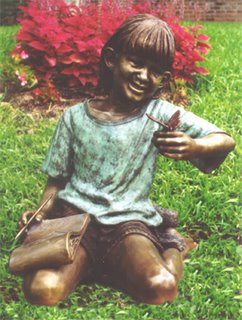
If you are at this part of Ms. Mongeon’s web site you are probably considering a sculpture to honor someone that you love or admire. A sculpture that captures and expresses the incredible magnitude of not only a person but a life lived. Posthumous or memorial sculpture is one of the artist’s favorite sculptures to create.
“The process of remembering and creating is not always an easy subject for individuals to broach. I understand all of the nuances involved and would be honored to create this work of art with you. To not only lovingly guide you through the creative process and the recollection of the loved one, but also to celebrate this life with you. Thank you so much for considering me. I am truly honored.”
Bridgette Mongeon
You can see some of memorial sculpture work on the gallery pages. Ellie, shown on this page, has her own page discussing the process that the artist and her parents went through in creating the Ellie memorial. If you would like to talk further about a project please fill in the artist’s contact form and she will be in touch with you.
The following is an excerpt from the artist’s upcoming book Bringing to Life the Spirit of the Deceased- A Sculptor’s Journey Chapter One- Why I Am Drawn to Posthumous Sculpture.
“I have always been intrigued with the story that I heard about elephants, marveling at the bones of their ancestors that they never knew. I remember seeing an elephant documentary that said that elephants that came across bones of their ancestors would pick them up and caress them, passing them from one to another in a respectful but mourning ritual. By doing so, it helped them come to terms with death. I feel that this action, this simple action by a wonderful and majestic creature is what I feel when I create posthumous portraiture. When the box of personal affects comes to my studio and I examine its contents, from that day forward until the day that the sculpture is complete, I have spent time lovingly caressing the life that I have had the pleasure of being introduced to. I turn that life over and over in my hands and in my heart as lovingly as those majestic elephants did with the bones of their ancestors. It is through this ritual and my art that my experience is enhanced and the healing process and letting go occur for my client. “
Bridgette Mongeon
Check Out This Artist’s Work—The Avatar Sculpts In ZBrush
check out this artists work. The avatar sculpts in zbrush http://www.zbrushcentral.com/showthread.php?t=079195 I was on the zbrush web site and found this. So cool to look at. I especially like seeing the people reference!
3d Printing In Paper?
A wonderful link for MCOR. MCOR is a Swiss company who has created a 3d printer that will print in paper. For those who know about 3d printing the cost of the materials going through the printer is a great expense. But in the case of paper, that is not as expensive.
A Great Book On 3d Printing
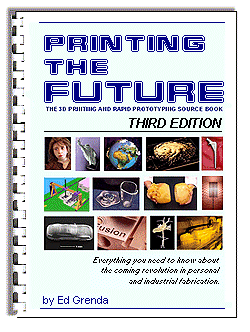
I just wanted to tell you about a book that has really helped me in my graduate studies. I hesitated in purchasing it because it was a little on the high side and the binding and photograph shown did not really make me feel confident in the contents of the book, but don’t let that fool you. Ed Grenda really knows his stuff, and I don’t think there is anything about 3d printing that is not in here. As long as he keeps up with the technology with further editions I would say it is a must for the shelf of any person interested in 3d printing. Plus his web site has numerous articles and boo koos of information. ( it also does not look very professional but don’t click away too soon. It has a wealth of information.) I was privileged to talk to Ed last week about some of my questions and my own research and he gave me some wonderful leads, which I will be sure to pass on here.
I also invited him to let me interview him for a podcast, should we decide to start up the art podcasts and talk about 3d, ( Which I am very excited about.). Anyway. Thumbs up on this book. I would highly recommend it.
The Upside Down Christmas Party
I failed to post about the Upside Down Christmas Party. There were quite a few different groups of people but there was much fun had by all. Christina Sizemore- My daughter showed her artwork, and you know there is always sculpture in my studio, along with my God’s Word Collectible series. Plus the loft was opened up for 3d people to show their work. Though all they really did was come upstairs and eat cookies. My favorite part of the evening.. the fire pit that my family bought me and we broke in and singing with friends.
And of course as many of you know we ask you all to help decorate our tree with something on your person, in your car or found. Here are some new ones. ( the watch is from a soldier. I can’t believe he put his watch on the tree. He is home on leave and headed back soon.)
I think we will have to have another one next year.
Wonderful Conversations- Ton of Information
Last week Bob Wood from ex one put together a conference call between the following people and myself. As Bob put it.
The purpose of the call is to attempt to answer as many questions as we can for Bridgette who is researching information for a book that she is writing. I have had many conversations with her over the last year or so and she has toured our Houston RCT jobshop. To paraphrase what she is trying to ascertain from us is how a traditional sculptor can migrate into the electronic design and manufacturing world. As all of us know, it took us years to figure this out. Bridgette is trying to define the process so that traditional artists can become productive without having to go through a painful learning curve that may cause them to shy away from this technology.
HE knows me well. Though he also failed to say.I have pitched a second book idea, am writing articles on these subjects and a good deal of my graduate studies is around the process. On the phone were the following people. It was so great to chat with these very knowledgeable people. It was also good to be around 3D people who, when I told them that I wanted to get designs out of the computer did not say, “why do you want to do that?”
Bridgette Mongeon – Sculptor, Artist, Author
www.creativesculpture.com
Houston, TX
Chuck Gailey – 3D Designer, Architect- designer, Artist
www.otbdesignworks.com
Whitefish, MT
Gabriel Obregon – 3D Artist, Freeform designer
www.hybrid-learning.com
Pittsburgh, PA
Mike Orange – Prometal Production Manager
www.prometal.com
Irwin, PA
Bob wood
All I can say is I wish I would have recorded this meeting. You all know I have been doing Christian podcasts for a while. Don’t be surprised if you begin to also see some art podcasts posted here. I have everything set up for podcasts and my spotonradio.com station has another channel. Now all I need is the time.