
Colbert Has His Head Created As A 3D Print
Makerbot talks about scanning and creating a 3d copy of Colbert. For those who are not aware of the Maker bot here is a link to them. The other leading 3d homemade printer is RepRap.
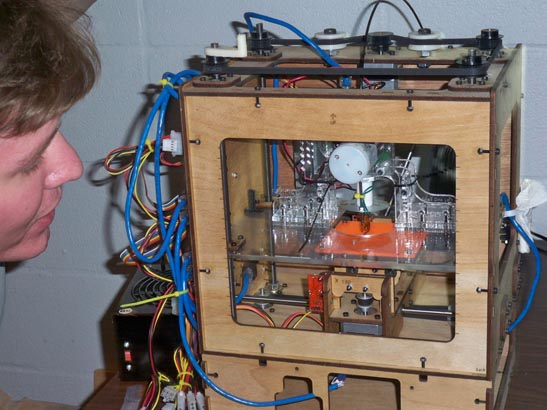
I have seen the cup cake which is the baby Makerbot in action. Sure would like to get one of these, but I’m holding out. I think the Reprap is now offering a ceramic 3d extrusion attachment. Now we are talking.
Creative Angst- Step 3-Puking On The Page
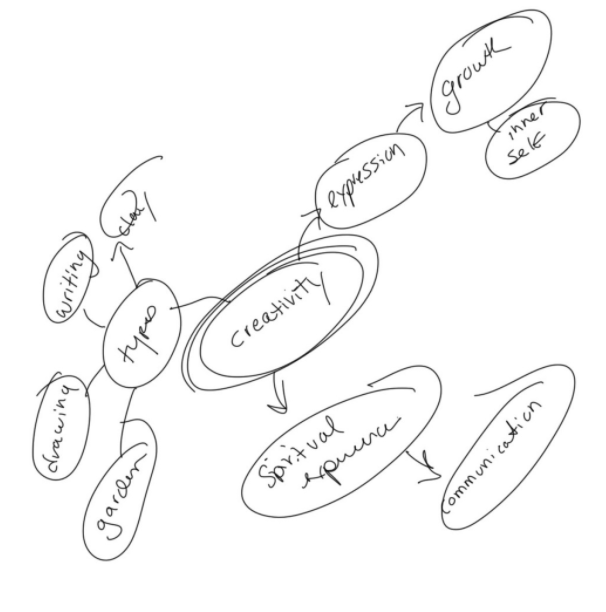
Now that you have your notebook, I’m going to teach you some things that will help you get to your subconscious and your creativity. Because we have a notebook, and usually notebooks mean writing, I’m going to teach you this little trick that I learned years ago. Not everyone is a writer and sometimes just owning a notebook can feel overwhelming. These tips I am sharing have helped me to write and organize my thoughts. A long time ago I went through some of these processes and learned quite a bit about myself and my creativity.
Clustering developed by Gabriel Lusser Rico.
Clustering is similar to mind mapping, but I feel clustering is so much better. It fits my personality perfectly! Take one whole sheet of paper preferably one that has an entire white sheet next to it. Now, in the middle of the sheet write the word creativity and circle it. Now let your mind and your hand go and think of everything that this word means to you. Draw a line and another circle, does that thought lead to another one? Then write that thought down and another circle. When a thought is depleted, come back to the center and write another trail of words from the word “creativity”, this can be anything, personal items, sayings, anything that comes to your mind. Let your mind go. What does creativity taste like, smell like, sound like etc? If you feel stuck for a moment, doodle on the page, circle a word or wait a moment. When you feel you have exhausted your thoughts then go to the right-hand side of the paper, the clean sheet and start with this prompt.
Creativity is…
Then let yourself write for a few minutes. There is no right or wrong way to do this. There is no one to check your spelling or your grammar and that is not important. Just write. I call this puking on the page. No need to sort through your vomit to see what you have eaten, just purge!
When your writing is complete, if you want to edit it you may. Please be careful when doing your free writing, some people have an internal editor that is so overpowering, it does not let them do anything without butting in.
If you want to share your thoughts, I would love to hear them. Check out the forum and start a thread or look for a thread called Creativity cluster 1 under the Creative Angst forum. Or post it right here on this blog post as a comment. Give yourself a pat on the back for loving your creative self.
We will use this technique often to help us get through our creative barriers and to understand some of the things that might be holding us back concerning our creativity.
As a side note- clustering is a powerful tool. It can be used in business, for students and for just about anything that requires you to be creative.
We will be working with this technique from time to time, as well as some other creative techniques that I have developed. IF you want to cluster more, feel free to do so. Don’t feel confined to only writing what I tell you in your creative journal. Explore. I’ll be sharing more prompts later- Happy creative journaling.
My two favorite books by this remarkable woman
Creative Angst- is a series of blog posts by sculptor Bridgette Mongeon that help individuals to get past their creative angst.
I CAN’T DO THIS ALONE
Do you need a little hand holding, somewhere to be accountable? There are two suggestions
1. Comment on the blog posts,
WHEN WILL YOU BE BACK?
How will I know when there are more posts? There are several ways-
_____________________________________________________________________________
Bridgette Mongeon is a sculptor, writer, illustrator and educator as well as a public speaker.
Her blog can be found at https://creativesculpture.com.
She is also the owner and creator of the God’s Word Collectible Sculpture series
Follow the artists on twitter twitter.com/Sculptorwritertwitter.com/creategodsword
Facebook http://www.facebook.com/bridgette.mongeon
Listen to The Creative Christian Podcast or the Inspiration/Generation Podcast Click on Podcast Host Bios for a list of all podcasts.
Listen to the Art and Technology Podcast
Class- Learn How To Sculpt A Likeness
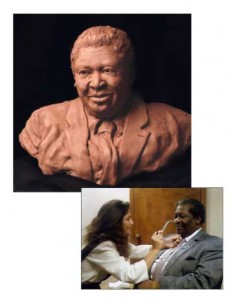
create a sculpture of anyone.
A portrait sculpture class will be given by master sculptor Bridgette Mongeon in her Houston area Heights Studio. The process of sculpting a bust and the tools you will learn in this class can be translated to sculpting any of your loved ones. Our subject is a beautiful baby, an inspiring model for all and a creative inspiration for those who might have a hankering to sculpt dolls.DATE:The class will take place two Saturdays, June 18 and 25th from 9:00-3:00. Please bring a sack lunch. The cost of the class is 200.00 plus $25 material fee. Space is limited.(There is no need to bring materials, if you have sculpting tools especially calipers, it is suggested to bring them, but not necessary. Be sure all of your tools are clearly marked with your identification. Smocks are also encouraged. ) Bridgette measures B. B. King with calipers.
To register:Click the Pay Pal link below for your Pay Pal payment or contact Bridgette and she can send you an address to pay with a check. Please register by Monday June 13th. If you need further information please call 713-699-1739. The artists work can be found at https://creativesculpture.com NOTE we are setting up a second class for those who cannot make the June date. the dates are tentatively August 6-13th. Please indicate which class you are taking.
In Which Medium Is It Easier For You To Concentrate? An Interview Cont.
10. In which medium is it easier for you to concentrate?
They each are great. Working in the studio listening to an audio book with tools and photographic reference strewn about is a wonderful place. However, settling into my workstation upstairs with classical guitar music playing and my cintiq is another great vibe. Though I am probably more apt to get distracted being on the computer and having access to the Internet, or having a problem with zbrush or mudbox and having to look it up. Digital tools change regularly with each update, making it a challenge. So my answer would be whatever I am in the mood for and meets my present need.
This is an interview of 10 questions by Mathias Herbster of FH Vorarlberg University in Austria directed to Sculptor Bridgette Mongeon about the comparison of digital and traditional sculpture.
______________________________________________________________

Sculptor, Writer and Speaker
Bridgette Mongeon is a sculptor, writer, illustrator and educator as well as a public speaker.
Her blog can be found at https://creativesculpture.com.
She is also the owner and creator of the God’s Word Collectible Sculpture series
Follow the artists on twitter twitter.com/Sculptorwriter twitter.com/creategodsword
Facebook http://www.facebook.com/bridgette.mongeon
Listen to The Creative Christian Podcast or the Inspiration/Generation Podcast Click on Podcast Host Bios for a list of all podcasts.
Listen to the Art and Technology Podcast
Is It Easy For You To Identify And Judge 3-Dimensional Shapes, Distances And Proportions On a Computer Screen? An Interview Cont.
9. Is it easy for you to identify and judge 3-dimensional shapes,
distances and proportions on a computer screen?
1. The hardest part, and we mention this in the book is the size of the sculpture. If I am working on a maquette in the studio, I know if I enlarge that maquette 500% I will not have as much detail as I need. So what is the actual size of a virtual piece of art? What happens with the translation from digital work a the size I have created, to the physical size I need output?
2. I would love to see calipers in the digital programs. Something that resembled more traditional calipers in a digital environment.
3. I also was very confused when I first worked in mudbox with perspective view and orthographic view.
4. There is also a cliche with Macs that if you hit the some keys in a certain order your sculpture flips. This is not just a problem with Mudbox or Zbrush but many graphics programs. This freaked me out, and I wish someone could solve this.
5. It is easier for me to judge 3d space now than in the beginning. Though when symmetry begins to act funky, and I know It is some sort of driver error, I get a bit frustrated. I love being able to spin around a sculpture.
6. I do wish that I had more access to my photographs. The one solution I have found for this is Macs Photstickies.
By the way, question number 8 was
8. Which medium is more comofortable for you to use?
( see other posts)
This is an interview of 10 questions by Mathias Herbster of FH Vorarlberg University in Austria directed to Sculptor Bridgette Mongeon about the comparison of digital and traditional sculpture.
______________________________________________________________
Sculptor, Writer and Speaker
Bridgette Mongeon is a sculptor, writer, illustrator and educator as well as a public speaker.
Her blog can be found at https://creativesculpture.com.
She is also the owner and creator of the God’s Word Collectible Sculpture series
Follow the artists on twitter twitter.com/Sculptorwriter twitter.com/creategodsword
Facebook http://www.facebook.com/bridgette.mongeon
Listen to The Creative Christian Podcast or the Inspiration/Generation Podcast Click on Podcast Host Bios for a list of all podcasts.
Listen to the Art and Technology Podcast
What Do You Miss In The Digital Sculpting Technology? An Interview Cont.
7. What do you miss in the digital sculpting technology?
As mentioned before, ease and affordability of output. Ease of quickly sculpting without having to worry about topology. As I have mentioned before, retopologizing is actually the holy grail of this process. However, I have seen this change over the last year, and it is quickly becoming a non issue. I look forward to exploring these in the up and coming months.
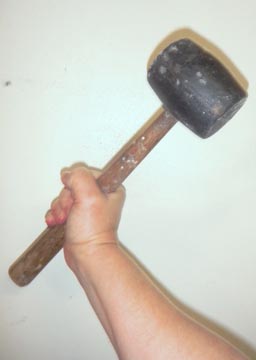
At first I might have missed much about traditional and I still will continue in it. However, one of the main factors that pushed me in the direction of this exploration was damage to my hand, I could no longer hold a sculpting tool. Years of pushing and pulling clay, pounding with tools or scraping had taken its toll. I have since had surgery and am happy to say I have my hand back, but the advances and exploration of this digital technology will be a very important element of creating late in life, when my body may rise up again in revolt. It has extended my tool set and capabilities as a sculptor far beyond anything I could have imagined for myself.
This is an interview of 10 questions by Mathias Herbster of FH Vorarlberg University in Austria directed to Sculptor Bridgette Mongeon about the comparison of digital and traditional sculpture.
______________________________________________________________
Bridgette Mongeon is a sculptor, writer, illustrator and educator as well as a public speaker.
Her blog can be found at https://creativesculpture.com.
She is also the owner and creator of the God’s Word Collectible Sculpture series
Follow the artists on twitter twitter.com/Sculptorwritertwitter.com/creategodsword
Facebook http://www.facebook.com/bridgette.mongeon
Listen to The Creative Christian Podcast or the Inspiration/Generation Podcast Click on Podcast Host Bios for a list of all podcasts.
Listen to the Art and Technology Podcast
Which Medium Enables You To Work More Spontaneously? An Interview Cont.
6. Which medium enables you to work more spontaneously?
Pause, pause, pause.

I would be inclined to say traditional medium, but there is so much that the digital medium has to offer and it is rapidly changing— I can be quite spontaneous. For example, posing a Daz model in the projects I mentioned earlier is so spontaneous for me. Unfortunately, I do a lot of sculptures of children and wish they would expand that line more. I’m also now using the posing of Daz models to assist me with 2d work – More Illustration on this blog.
When I think about architectural sculpture, as mentioned before, I would say digital. But I think the important element is that it is not an either or scenario; it is taking a mix of many different technologies and traditional methods and mixing them up for whatever project is at hand. Before my introduction to digital possibilities, my tools fit in coffee cans that sat in my studio, or in a tool box. Now they are also in the office or at service bureaus or as bits of data.
This is an interview of 10 questions by Mathias Herbster of FH Vorarlberg University in Austria directed to Sculptor Bridgette Mongeon about the comparison of digital and traditional sculpture.
______________________________________________________________
Sculptor, Writer and Speaker
Bridgette Mongeon is a sculptor, writer, illustrator and educator as well as a public speaker.
Her blog can be found at https://creativesculpture.com.
She is also the owner and creator of the God’s Word Collectible Sculpture series
Follow the artists on twitter twitter.com/Sculptorwriter twitter.com/creategodsword
Facebook http://www.facebook.com/bridgette.mongeon
Listen to The Creative Christian Podcast or the Inspiration/Generation Podcast Click on Podcast Host Bios for a list of all podcasts.
Listen to the Art and Technology Podcast
Faced With a Choice: Which Input Device Would You Prefer – Tablet or Haptic Device? An Austrian Student Interview Cont.

digital medium. I love this product.
5. Faced with a choice: Which input device would you prefer –
Tablet or haptic device?
I work on a cintiq and love it.
I have never been able to work with a tablet. There is a disconnect in my brain when I try. I have never tried a haptic sculpting tool, but would love to, and if any company wants me to review one, send it on!
When I have a maquette that needs to be digitized I use a Next Engine scanner as mentioned in the Mudbox book. They are good and not very expensive. It costs me about $1,000 to have something scanned at a service bureau, so the scanner pays for itself quickly.
This is an interview of 10 questions by Mathias Herbster of FH Vorarlberg University in Austria directed to Sculptor Bridgette Mongeon about the comparison of digital and traditional sculpture.
______________________________________________________________
Sculptor, Writer and Speaker
Bridgette Mongeon is a sculptor, writer, illustrator and educator as well as a public speaker.
Her blog can be found at https://creativesculpture.com.
She is also the owner and creator of the God’s Word Collectible Sculpture series
Follow the artists on twitter twitter.com/Sculptorwriter twitter.com/creategodsword
Facebook http://www.facebook.com/bridgette.mongeon
Listen to The Creative Christian Podcast or the Inspiration/Generation Podcast Click on Podcast Host Bios for a list of all podcasts.
Listen to the Art and Technology Podcast
In Which Medium (Digital or Traditional) Do You Feel More Secure And Why? An Austrian Student Interview…Cont.

4. In which medium (digital or traditional) do you feel more secure and why?
I am comfortable, after 25 years of working in traditional clay of various kinds, and going to bronze. But I’m working hard at the exploration and learning about the possibilities and embracing them as I dance the dance that is digital and bridge the gap between the digital and traditional studios.
This is an interview of 10 questions by Mathias Herbster of FH Vorarlberg University in Austria directed to Sculptor Bridgette Mongeon about the comparison of digital and traditional sculpture.
______________________________________________________________
Sculptor, Writer and Speaker
Bridgette Mongeon is a sculptor, writer, illustrator and educator as well as a public speaker.
Her blog can be found at https://creativesculpture.com.
She is also the owner and creator of the God’s Word Collectible Sculpture series
Follow the artists on twitter twitter.com/Sculptorwriter twitter.com/creategodsword
Facebook http://www.facebook.com/bridgette.mongeon
Listen to The Creative Christian Podcast or the Inspiration/Generation Podcast Click on Podcast Host Bios for a list of all podcasts.
Listen to the Art and Technology Podcast
Does Your Thought-Process In Digital Sculpting Programs Differ From Your Thought-Process In Traditional Sculpting? An Austrian Student Interview Cont.
3. Does your thought-process in digital sculpting programs differ from your thought-process in traditional sculpting?
Yes, especially with the idea of being able to quickly get into a project, digital is slower for me. The other hindrance is I can’t spend as much time as I like with the digital processes. I work from commission to commission and not all offers the ability to use the digitally processes, and that slows me down.
Though I must say, that we should speak of the other digital tools that I use in my process. For example, In this video Digital Art for the Traditional Sculpture Studio I am using Daz 3d models and Poser to “sketch” in 3D. I absolutely love this. As I said, my mind thinks in a 3D form. With Jenna, in the video, we took that to milling, though she was small, it was the process that was important. I also loved working out the design for another client digitally
I am doing that with my present commission. See these posts.
The final results of the presentation using Daz, Poser Zbrush and Photoshop
Working through presentations Poser Zbrush Part-1
Working through presentations Daz, Poser, Zbrush Part-2
My husband, also an artist and writer, sat in on a new public relations conference with Daz 3D. Many of their models are sculptable, and I was very surprised at the geometry I found with this last project. Some might argue, “that is cheating.” I’m not sure it is. If this would have been a life size sculpture commission I would have taken this file of the players and had it milled out digitally- life size, in a heart beat. Though I would have had them milled naked and sculpted the clothes on them. I also expect I would have been cutting away the foam and changing positions as I progressed, but I do the same thing with my large commissions with armatures made in metal. Except I have to bang those with a mallet. Milling for enlargements is so great!
My preferred way of working for large or monumental work would be maquette, 3D scanning, foam, clay on foam. I rarely sculpt larger than life, but there would be no other way, in my opinion, to do this. Unless you are going to work on something like the American and the new digital processes used with data direct to mold. See my article in 2007 Sculptural Review Article.
Again, as an artist I’m paid to get a tangible medium to a client, I have to think to the end of the project. If I am sculpting in clay, I am still thinking through to the process of bronze casting. How does this work, how does this piece, this design translate to the final medium? I have to do the same with digital, though the tools and mediums available are so different and changing daily.
I will also mention that when working digitally, I prefer to change my material to something that resembles my traditional clay. I hate the plastic look in digital sculpting.
This is an interview of 10 questions by Mathias Herbster of FH Vorarlberg University in Austria directed to Sculptor Bridgette Mongeon about the comparison of digital and traditional sculpture.
______________________________________________________________
Sculptor/Writer/Speaker
Bridgette Mongeon is a sculptor, writer, illustrator and educator as well as a public speaker.
Her blog can be found at https://creativesculpture.com.
She is also the owner and creator of the God’s Word Collectible Sculpture series
Follow the artists on twitter twitter.com/Sculptorwriter twitter.com/creategodsword
Facebook http://www.facebook.com/bridgette.mongeon
Listen to The Creative Christian Podcast or the Inspiration/Generation Podcast Click on Podcast Host Bios for a list of all podcasts.
Listen to the Art and Technology Podcast