
3D Camp Houston Was A Success. Next Year Bigger And Better.
It was last Wednesday that my husband invited me to the 3D modelers and animators meetup. I was interested in the presentation on Zbrush by Johannes Huber. It was there that I met David Morris. David told me about a project he had been working on for just 8 weeks. It was a 3D camp, planned for this past weekend. He envisioned a place where people could get together and talk about 3D. My husband Mike delaflor and I jumped on board.
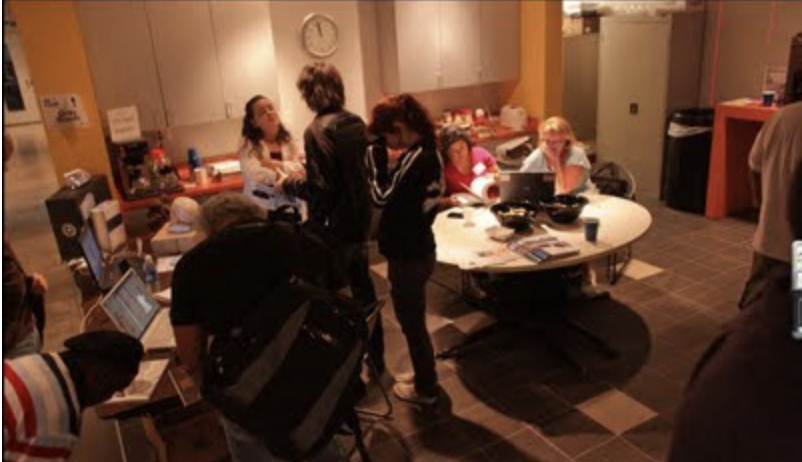
David was doing exactly what I wanted to do. I had actually been thinking about this for a year. I was going to do it this fall, but instead decided to perhaps make it a part of my graduate practicum. I had already talked to Next Engine, who have some wonderful affordable desk top scanners. Ex One who you have seen in previous posts. I have been contacting them about their direct metal printing and last month I went to see there printing sandcasting Molds. Ex One said when I was ready to get this going they would try to get Shapeways on board. For those of you who don’t know about Shapeways they are affordable service bureau for 3d digital printing, and they too are now offering digital printing in metal!
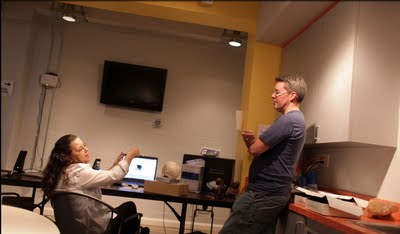
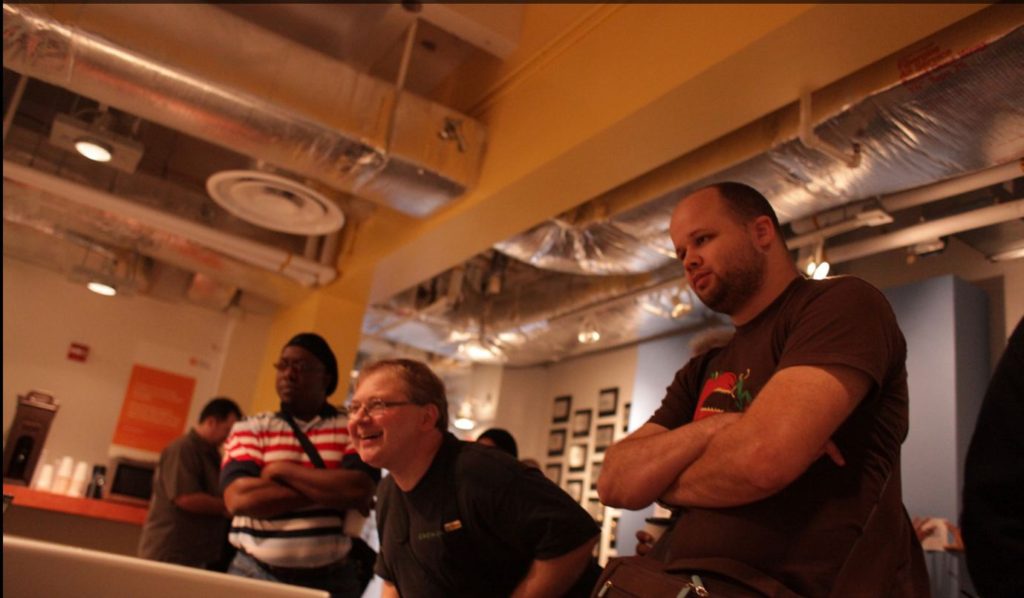
My goal was to get some vendors there and also offer some informative lectures on different processes of 3D. Well David did just that with 3D camp. I’m so excited and totally impressed with this young man. I think you will see this 3D camp grow in the up and coming years. I’m looking forward to presenting next year, and hopefully get the above vendors to demonstrate.
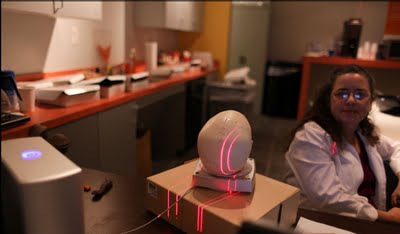
This year I demonstrated the 3D scanner, though I must say it was a crowded area and hard to get a good scan with so many people bumping the table. Still I get was able to sing the praises of this scanner that we are reviewing and using in our up and coming book, Digital Sculpting with Mudbox: Essential Tools and Techniques For Artists.
I also had this video playing and my article that I wrote for Sculpture Review on digital printing and milling where I talked about the incredible advances of Synappsys digital printing and their Data Direct to Mold process that is being used on The American.
My vantage point of 3D is coming from a traditional studio and using it to create traditional art. I suppose my focus then is a bit different than the traditional 3D artist. My graduate studies at Goddard- A Master of Fine Arts In Interdisciplinary Arts is based upon bridging the gap between the traditional and the digital studio. That is my interest. Though I have to admit, programs like Mudbox and Z brush are very intriguing and I expect I will be using them much more in the future. Oh no am I converting? Still I like the clay under my nails and my heart longs for dirty hands.
I encourage others to get involved with 3D camp next year, and plan on attending. I’m expecting it will double if not triple in size with a year of planning, some more backers, and some good promotion. If you would like to be a sponsore, If you are interested in presenting or are a vendor that would like to show at 3D camp next year please feel free to contact me or David.
Great job David!
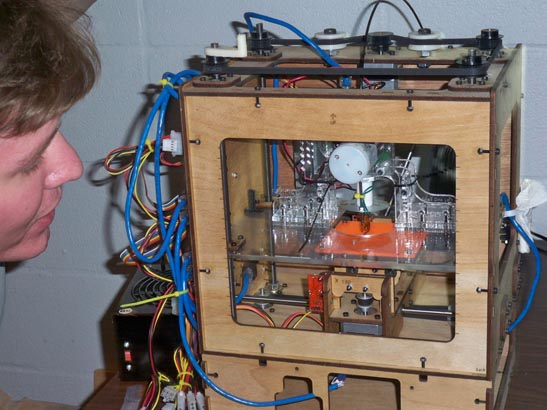
Some of my favorite things there revolve around output. This is a home made cnc router machine. To check it out further go to http://buildyourcnc.com/default.aspx
Many seemed to be interested in what a fine artist had to say in a 3D camp.
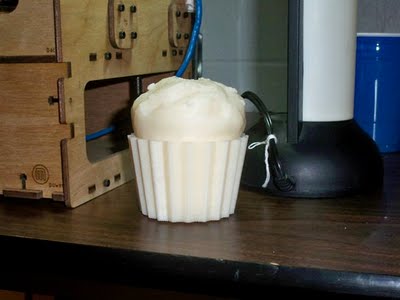
Another of my favorite had to again deal with output. It is the homemade 3D printer. This one is called the cupcake, and I must show that it can print a cupcake. I believe the cupcake costs about 700. to put together. There is another homemade one that I want to investigate but it costs approximately 3,000. Kind of steep to do for a hobby or to check out, but this other can print ceramic and chocolate, something worth investigating. I plan on reviewing all of these home made machines in an upcoming article.
3d Printing In Ceramic!
I’m looking forward to working with Solheim Rapid Prototyping/ Rapid Manufacturing Lab at the University of Washington’s Mechanical Engineering Department, collaborating and certainly want to add their process to the new book that I intend to write, my articles and a lecture. I love seeing video and am certainly glad that this was created. I will be trying to contact them on their process and new technology and will be sure to let you know what comes from that.
For Students About Entering An Art Show, and Culture Shapers
A Great Judging Day at Culture Shapers
Everything was a buzz yesterday at judging. It is good to see the other judges, all in different field but seasoned professionals and some old friends. They all take their judging very seriously and everyone is impressed with the quality of work that comes to Culture Shapers each year. One new judge expressed his impressions over the well-run and very large process that is done by Culture Shapers.
If you think that seeing the final show is inspiring, you should see how much incredible work is there on judging day. There is so much work and many very incredible pieces that never make the final cut. You have heard me say over the years that judging is, many times very subjective. It depends on the judges and their personal likes, their background and training, etc. There were some pieces that I would have liked to advance but I could not.
Suggestions
I always try to add these suggestions to students.
- Use the forms provided. Gives us information. Sometimes the information or description that is provided can change a judges view of a piece. For example, if you submitted something in photography and it was developed in a dark room, you should mention that. Or if you were trying to express a certain emotion or were inspired by something tell us!
- Go to the extra effort and time in presenting. If you have a great sculpture and it is poorly mounted, it will show and may change our vote for your piece.
- Don’t cut corners when creating. When you feel you are tired of your artwork, walk away and come back to it. Rushing through art shows in the finished product. It is better to give the art your full attention until it comes to completion.
It may be too late for you to use some of these suggestion this year, but do pay attention to them next year, and for all the shows that you enter.
Judging Process
For those not familiar with the process of judging here is a quick run down.
Each judge ( there are three judges) is given 20 yellow post-its. We walk around the show and place the slips on those piece that we like and that we think should advance to the next round. If another judge has put a post-it on a piece then I might not put mine there. Many times we agree on what should advance and then I hand in extra post-its. If it did not advance there are a few reasons.
- It did not compare to the quality of work that we had seen.
- You may have not done some of my suggestions that I mentioned earlier.
- It got lost amongst the other work. I sculpture this happens a lot. I am so glad there are three judges. Smaller pieces or those that just happened to be placed in a dark area of the room might not get a judges attention.
- It may be a part of school project and there are several pieces that look like yours. It is hard to judge these, unless it is spectacular and really stands out.
Then we are given five pink post-its. We can only place these on the pieces that have yellow ones on them already. Oh this year I walked back and forth between two pieces that I liked, one was with a bird cage and hand and the other was i think titled “Heaven and Hell.” I put it on one and I was so sorry I did not have two pink slips. It was then that I noticed that another judge had marked another one that I had liked. I asked permission to move my pink slip and that allowed me to advance both of these pieces.
Then the pieces are lined up. We are then given our slips of paper that we write our comments on. I must interject, if you have come this far your work is superior. The forms however give us a numbering system and the words “below average, average, etc.” I hate this and cross them off of my sheet. I wish Culture Shapers would delete them. For us judges it is just a numbering system and should not be called “below average.” As I said, if you have made it this far that term should not be used. Now this is my opinion and I hope one day to have those off of the forms. Anyway… We go through and look at each piece. I love this part. I get to sit down and become familiar with your work, to really examine it. This is where you can sway me by your quality, and words. Each judge hands in their numbered pages and we go to lunch and wait for them to add them up and them put them in numerical order.
We are not aloud to speak to each other until the final round- after all the artwork is lined up. This is an essential part of judging, especially in sculpture. Many times there are many different mediums. I count on my fellow judges to point out details, difficulties and intricacy in each of their favorite pieces. Pieces can be moved on this final table but only three spots. Usually judges agree. Sometimes they fight for their pieces- your artwork. But it is all still friendly.
In all I loved the choices. Of course in other categories there were some pieces that where last in the finals that I would have put first, but that is again subjective and my own opinion. There was a discussion between us artists if photographs should be used allowed to be used in the drawing section of the show. Some judges were passionate about not allowing photographs. I think they want students to draw from life. I however think using photographs is very good and I know many professional artists that would agree, in fact, both my husband in his work and many other illustrators and artists use photographs as reference. We often take our own photography so that we can get the proportions, lighting etc just right. I’ll even ask my husband, “ Can you strike this pose?” Or he will ask me. Can you hold this medical instrument. For us photography is part of the process. But again that tells how different artists and judges are.
I want to encourage each of you to continue working on your art. For those who want suggestions or critiques or whatever. Please feel free to contact me, but… do not send me anything that you think you might enter in the show in the sculpture category next year as it will have to be disqualified. You can find me on Facebook, check out my websites— Fine art , God’s Word Collectible Gift Line. I have also started podcasting and have a new section of the podcasts called Creative Christians. We will be interviewing famous creative Christians. For those interested you can find a list of the podcasts here Or you can listen to them from the God’s word Collectibles Facebook Fans page.
Oh yes, be sure to check out my blog on my website, as I often post articles about Culture Shapers. Last year I also wrote an article about the winners at Best of Artists and Artisans column.
I’m A Genius! 3D Printing Of The Human Organs?
I’m a genius, or maybe my brain just thinks such radical thoughts that now and again I think like a genius. For those of you who don’t know, my graduate study at Goddard College consists of research that bridges the gap between the traditional studio and new technology. For a sculptor, such as myself, this technology is based on something that I call tradigi sculpting which utilizes both traditional and digital means to create artwork. My research is evaluating digital milling. Digital milling is taking my artwork, scanning it and then enlarging or reducing it to be milled out in foam, wood or stone. Digital printing is another resource and a technology that is quickly growing and changing. It is when a computer and a digital printing machine slowly prints, layer by layer, in 3d. What you end up with is a physical object. Yes, I know it sounds like the replicating machines on Star Trek, but this is not science fiction.
Recently I uncovered the work of both Sebastien Dion from the Center for Applied Technology at Bowling Green University in Ohio and Solheim Rapid Manufacturing Laboratory at the University of Washington in Seattle. Both have been researching and printing in ceramic. Solheim has even printed their ceramic “recipe” in the Ceramic Arts Daily, February 1, 2009, article “The Printed Pot.”
As my research continues, I thought, “It appears that 3D digital printing is all about having the right “recipe”. It is just coming up with the correct binder and the correct material to fuse.” This is where my brain started to go into genius mode and my research landed on what I’m about to share. I know that Science is using 3D printing to help them visualize scientific data. For example space physics simulations or molecular models that help scientists visualize proteins. This allows scientists a way to examine information in a physical way that has never been available to them prior to 3D printing.
Science is also using 3D printing to print a medical implant that fits perfectly with a patient. The reason is that it is created from MRI scan data of a patient. ) Surgeons can also use 3D printing to help them with their surgeries. By having the physical replica of a patient they can practice surgery or see complications. 3D prints are also used in education. How about printing skin in a 3D digital printer? Just think what this would mean to a burn victim. Or how about replicating a bone with 3d printing? And doing so out of bone material to replace a patient’s own shattered bone? Because our bodies are symmetrical a left arm bone could be recreated by using images of the right arm.
If all of this technology and 3D printing is not fascinating enough, I thought, “If it takes just the right binder and recipe, is it possible to print organs?” I was afraid to even say it out loud to my husband, a medical illustrator, who I knew would at least hear my crazy idea and not laugh too hard. But with further research, I turned out not to be so mad after all. Indeed 3D organ printing is happening or at least being studied. Here are some journal articles and videos to prove it. This is absolutely fascinating! Just check out the video with Dr. Gabor Forgacs, University of Missouri-Columbia. He talks about how the bio printer prints out living cell clusters drop by drop that fuse together to create tissue structures. Have a damaged organ? One day they will be able print out the organ needed and do it using your cells! Perhaps the printer will print within your own body cavity. Yes, there is still some headway to be made with this technology, but the technology is here and on it’s way. My crazy thinking is actually genius!
by Bridgette Mongeon
https://creativesculpture.com
At and Technology Podcasts coming April/May 2010
If you would like to use this article on your website you may. Please include the authors name and URL.
Learning New Information To Share With Others
I have been very busy working on the Mudbox book. I have also pitched a second book all on my graduate studies of 3D digital printing, milling and scanning as it pertains to the traditional art studio. I’ll let you know as soon as the publisher bites. Meanwhile it is on to finishing the Mudbox book and continuing my studies and research. I have found some great videos on a wonderful site called Guerilla CG. I would highly recommend it.
Since I am now working on retopologizing and writing about that huge word. This video was important to me. As you will learn, quads are better than triangles when it comes to sculpting or animating. So I am learning how to take my artwork that is scanned and retopologize it so that I can change it in Mudbox and then print it out. I have an article about the scanning process that should be coming out soon on my Best of Artists and Artisan’s Sculpture column. I’ll be sure to put the link here when it comes out. Now back to research.
Our Interviews with Creative Christians.
For those of you who do not know, besides sculpting and writing I also create a podcast that is sponsored by my God’s Word Collectible gift line. Inspirations/Generations has added a new segment called Inspirations Creative Christians. We are interviewing creative Christians to learn about their faith, process, inspiration and other things. You can find all of our podcasts on the God’s Word Collectibles website. Or on our God’s Word Collectibles Facebook Fans page.
Here is a description of our first Creative Christians podcasts. If you would like to listen, just click on the links.
October 2009
Creative Christian Interview- Brad Stine Part 2
Christian Comedian Brad Stine talks about his creativity as a child, his creative process and the importance of creativity in the Body of Christ Part 2 (Inspirations_Creative Christians 0045 45 minutes)
Creative Christians Interview- Brad Stine Part 1
Christian Comedian Brad Stine talks about his creativity as a child, his creative process and the importance of creativity in the Body of Christ Part 2 (Inspirations_Creative Christians 0045 31 minutes)
September
Creative Christian Interview- Strand of Pearls
Kellie Copeland Swisher has been a creative Christian her entire life— working at Kenneth Copeland Ministries, making movies, developing children’s curriculum and her recent creative endeavor of Blue Grass Gospel singing group Strand of Pearls. In this interview she shares her thoughts on creativity and her inspiration. (Inspirations_00043 55.47 minutes)
July
Creative Christians- interview with actor, speaker and award winning author Donna VanLier
This is the first podcast of a new series called Creative Christians. Here we will interview many different individuals on their creativity process, their faith and the struggles and inspiration. The first creative Christians Segment is with Donna VanLiere Speaker, actress and award winning author. (Inspirations_0037 43 minutes)
3D Printing In Ceramic! So Cool!
Too cool, 3D printing in ceramics! Yes. I love this idea. I love where the technology is going. Check out Ceramic Arts Daily article The Printed Pot. Solheim is on my list for interviews.
3d Printing In Sand And Metal!

I was invited by Bob wood to the proMetal shop here in Houston. We have another engagement for Bob to come to the studio as soon as my schedule frees up a bit.
I was thrilled to be able to see the process of printing in sand. Yes, there you have it… 3D printing in sand! As usual this technology was first developed for manufacturing as you see by this casting of this fly wheel thing.
I’m also putting some pictures up of their 3D digital printing in metal. This is another part of of the company. The skull was created that way. Yes, they say they can print in bronze or gold! I’ll be describing this process in an up and coming book.
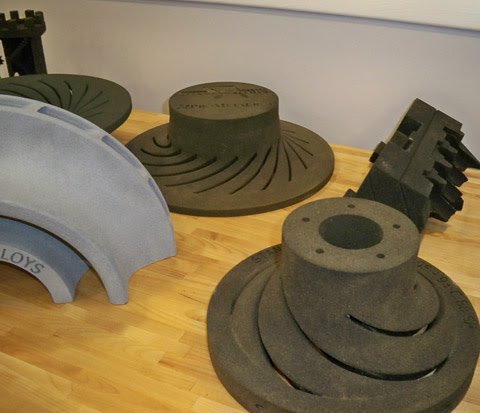

The sand is like the investment cast on the mold. and it is printed in this huge machine that Bob Wood and I are standing in front of. If this process can be perfected to get smooth surfaces it can really take over the investment casting of bronze casting. The lost wax method would literally be history, and there would be no more storing all of those molds! YEAH TO THAT! plus once the art is computerized it could be made to fit piece to piece. In other words, the seams would be put together like a puzzle. in the computer aiding in the welding together. So cool. The possibilities of this are incredible.
I have to get through the Mudbox book first. But am chomping at the bit about starting this other book. It will cover all of the new technology of output from the computer, as well as getting items into the computer— Digital scanning. So excited!

The Documentation Of Creating a Life-Size Newsboy Sculpture
This part of Bridgette Mongeon’s blog documents the entire process of creating a life-size sculpture from start to finish. You are welcome to follow the links below, of course they will go backwards. But if you want to start from the front and go back, follow this chronological order.
Students and Teachers.
There are study materials, questions and educational material for much of the process. They are listed below.
Archives from sculptor Bridgette Mongeon and
The Texas Press Association Newsboy sculpture
To read previous journal entry click on the desired date
August 26, 2004
The News
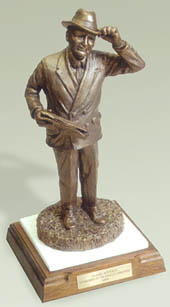
I receive the information that I have been awarded the commission of the Newsboy for the Texas Press Association. In this journal entry I share some of passion for sculpting children and the photo of the Jesse Award created for the Houston Chronicle
Students learn about • Art and History
• Geography
August 27-30, 2004
Thoughts on The Project
• The beginning of the thought process concerning the sculpture
Students learn about • The difference between newsboy and news carrier
• The death of a newsboy • The history of newsboys in America and the Spanish American War
August 28
The Beginning
Students learn about • The first newsboy
August 31, 2004
How I Pick a Pose
• An artist’s reference, Picking a pose
Students learn about • The call of the newsboy events that happened in the last 125 years.

Sept 2, 2004
The Meeting
• Meeting with the Texas Press Association • Deciding on a pose
Students learn about • History of the lost wax method

September 5-7, 2004
Beginning the Small Sculpture
• Working with a model and roughing in the small newsboy sculpture
Students learn about • The history of knickers
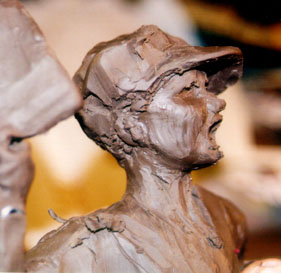
September 8-10, 2004
The Sculpting of the Small Newsboy
• Roughing in the face of the small newsboy
Students learn about • Scaling a sculpture • 3D figures of sculptures
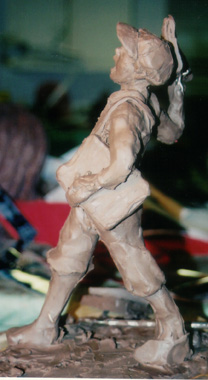
September 11-17, 2004
More Research on Clothes
and Sculpting of the Newsboy
• Researching newsboy outfit, zippers, and suspenders.
Students learn about • The newsboy strike of 1899 • the history of the zipper
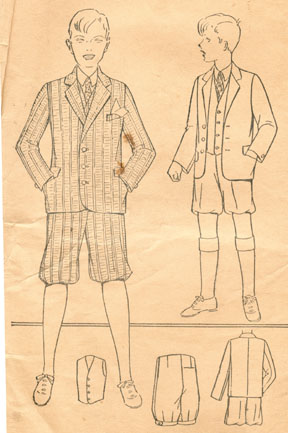
September 18-26, 2004
A Sewing Pattern for Knickers
and Sculpting Continues
• Roughing in the small newsboy, finding a vintage 1929 newsboy clothing pattern
Students learn about• How artists use proportion and measurements.
September 27-October 3, 2004-
The Creative Process
• Article Printed in the tribune • International newspaper carrier day
• Creative thinking process
Students learn about • History of the sewing machine
• Sewing a 1929 pattern for the newsboy
October 4-11, 2004-
Sculpting Tricks and More Research
• Sculpting tricks
Students learn about • Motivation with their art
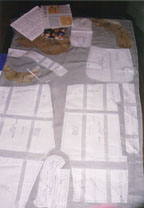
October 11-18, 2004-
Sewing a Vintage Outfit From An Old Pattern
• Sewing the outfit for the model • The final pose
Students learn about • Leisure time of a newsboy • Old toys
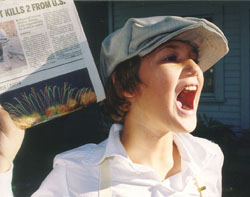
October 19-25, 2004-
The Finished Small Newsboy Sculpture
• Finishing the small sculpture • Receiving approval
Students learn about • The importance of folds and how to create them.
October 25- November 1, 2004-
Preparing the small Sculpture for the Foundry
• Preparing the small newsboy sculpture for the foundry
• A visit to the capitol building
Students learn about • Elizabet Ney and the history of Texas art • The Texas State Capitol building.
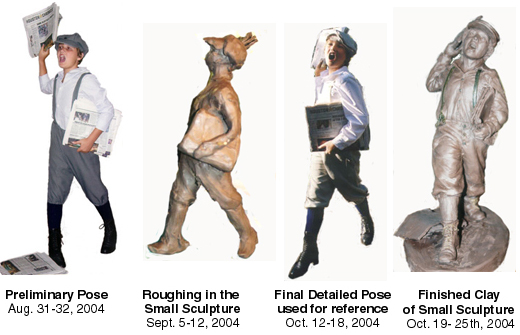
November 2-8, 2004-
Reviewing the Process of Creating
an Original Work of Art
• A review of the previous three months of progress.
• Information about copyrights and limited edition bronzes
Students learn about • Copyrights
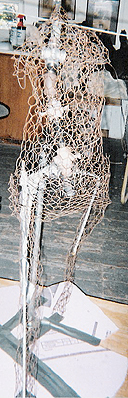
November 9-12, 2004-
The Beginning of the Sculpting
on the Life-size Newsboy
• Beginning of the life size newsboy sculpture • Creating the armature
Students learn about • The Penny Press • Yellow Journalism • Newspaper production at the time period of our newsboy
November 13-21, 2004
The Beginning of the Sculpting
on the Life-size Newsboy cont.
• Roughing in the large newsboy sculpture.
Students learn about • How to enlarge a sculpture
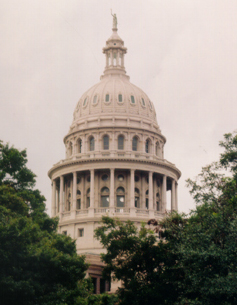
November 29- December 6, 2004 –
The Future Journey of our Newsboy
• The future journey of our newsboy
Students learn about
• The State Preservation Board
• The Texas Capitol building
• Texas Legislature • The Texas Senate
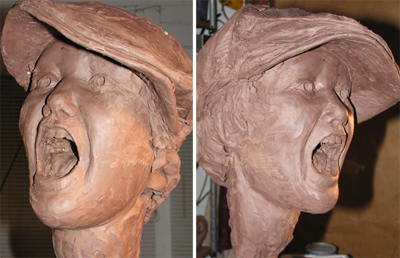
December 7 – December 13, 2004-
Frustration Of the Creative Process
• The future journey of our newsboy
Students learn about
• Newsboy Strike • The zipper

December 14 – December 21, 2004-
The Morphing of a Sculpture
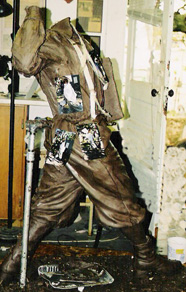
December 22 – December 27, 2004
-Working Through the Holidays
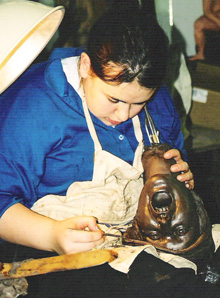
December 28- January 3, 2004-
Huge Strides In the life Size Sculpture
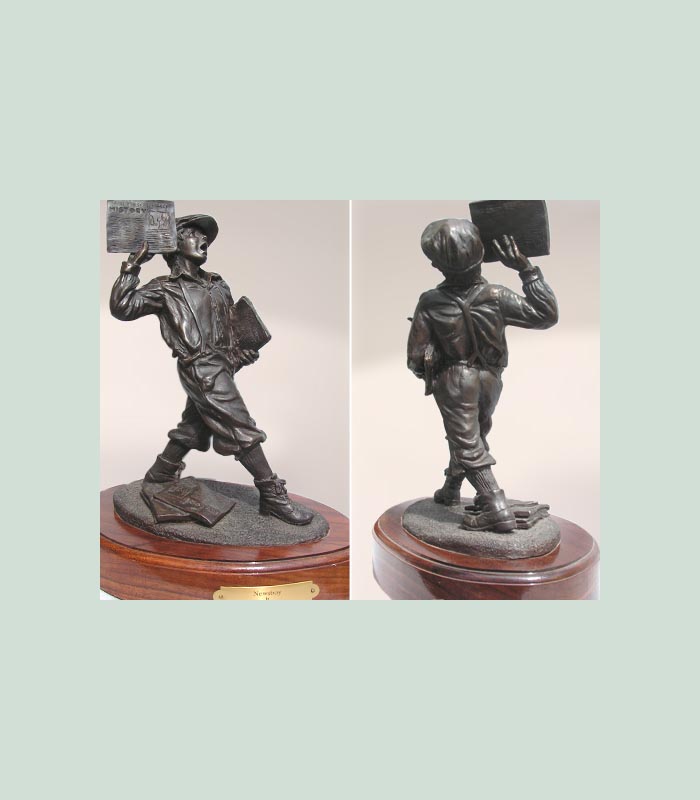
January 3-10, 2005-
Now WeAre Getting There
First small newsboy bronze • Head is added to the life size sculpture
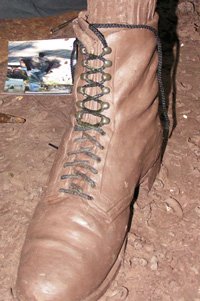
January 11-17, 2005-
Details on Life-Size Sculpture Come Together
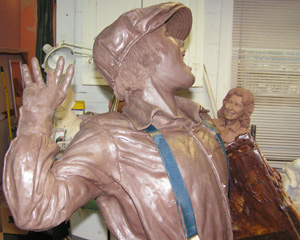
January 18-21, 2005-
Adding the Hand to the Life-size Sculpture and
Sculpting a Newspaper
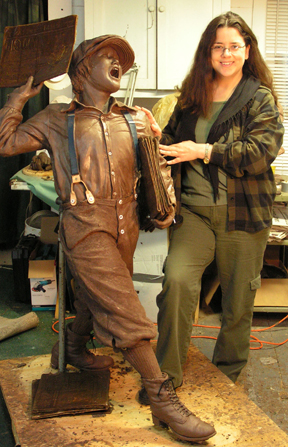
January 22-29, 2005-
Sculpting is Complete on the Life-size Newsboy
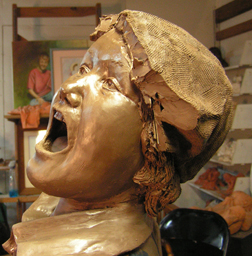
January 31-February 7, 2005-
The Mold Making Process
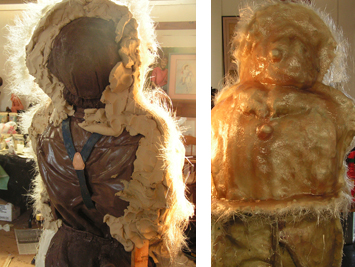
February 8-14, 2005
Mold Making Rubber and Fiberglass
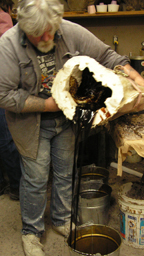
February 15-21, 2005-
Pouring the Wax
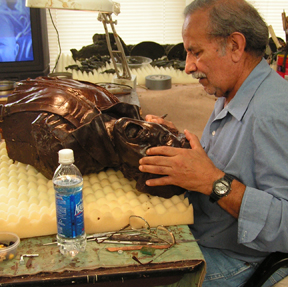
February 22-28, 2005-
Working the Wax
March 1-7, 2005-
The Dip. Learn about the next step in the bronze casting process – the dip.
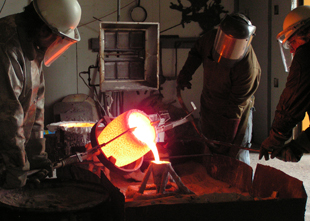
March 8-15,2005-
The Metal Pour
Students learn about • The Bronze Casting Process
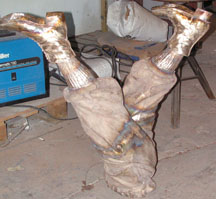
March 16-April 11, 2005-
Putting the Metal Together
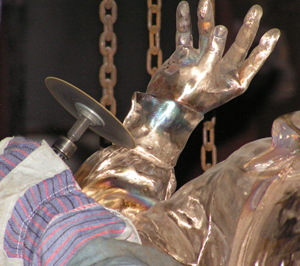
April 12-May, 2005-
Correcting the Metal
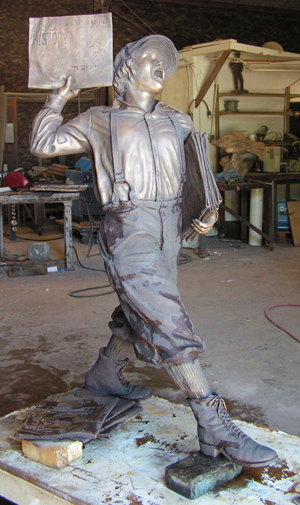
May 2005-
Completion of the Newsboy Sculpture
The newsboy sculpture is complete.
May 8 2005
Newsboy Life Size Editions.
Learn about the editions of the newsboy number one and two.
November 29, 2006
The Newsboy Placed
Bridgette visits Austin Texas and sees her sculpture installed. It is her first time seeing it.
November 28, 2006
Another Life-Size Newsboy To Be Created
For $20,000 the artist sells reproductions of the newsboy. Another paper has purchased a newspaper. They are going to pay the extra $2,000 to have the newsboy headline changed to something of their liking.
December 7, 2006
Another Order For a Small Newsboy
For $1,350 plus shipping Bridgette sends the small newsboys to newspapers all over the country. It makes a great gift for a recognition of accomplishment.
January 12, 2007
A New Life Size Newsboy
See number two in the edition of the bronze newsboy at the foundry in bronze.
May 2005- Present-
The Life Size Limited Edition
The placement of the first in the edition of ten life-size bronze Newsboys and the remaining sculptures as purchased complete with their headlines changed to reflect times in history.
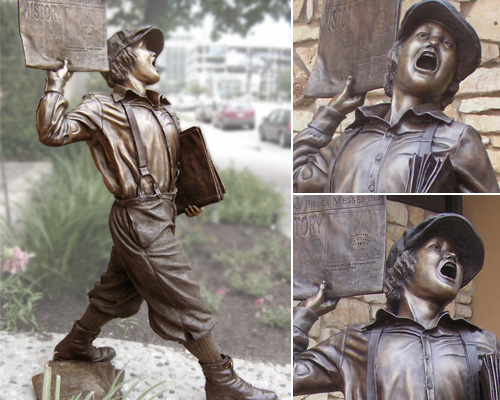
March 23, 2007
Artist Carves History In Bronze
A press release about how sculptor Bridgette Mongeon has a limited edition bronze sculpture in which she creates headlines in her bronze newspaper that match her clients inspiration.
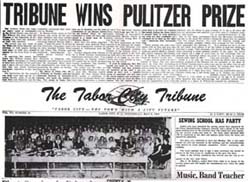
May 21, 2007
An Update on Number Two in the Edition of The Life Size Newsboy Bronze
The artist is honored that the headline for number two in the edition for this paper winning the Pulitzer for their fight against the KKK.
November 27, 2007
Newsboy Goes to Canada
Often people will purchase the small newsboy figurine for awards. Learn about the story of the O’Brien family and their contribution to the industry in this post.
May 19, 2009
It Is Getting Moldy Around Here- LOL
Sculptor Bridgette Mongeon searches for all of the molds of the newsboy to send to the foundry.
May 22, 2009
Body Parts About The Studio
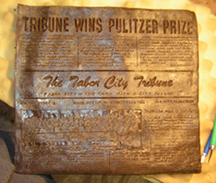
June 12, 2009
Wax Newspapers
Bridgette changes the paper that the newsboy holds to reflect a paper in the history of each collector.
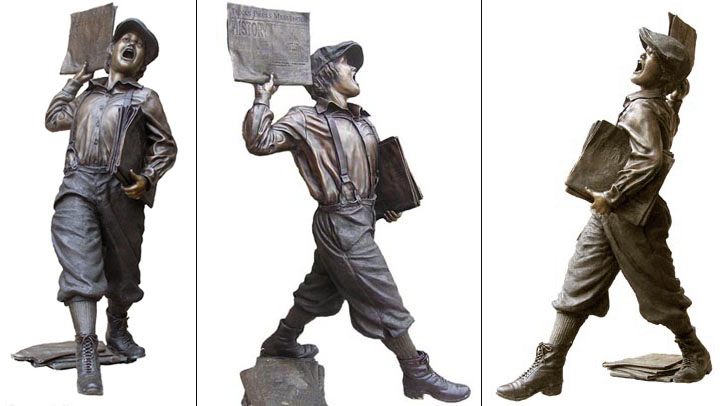
July 10, 2009
Newsboy Commemorates Journalism … Again!
Number three in the edition is sold. This time the newsboy will sell his papers in the North West.
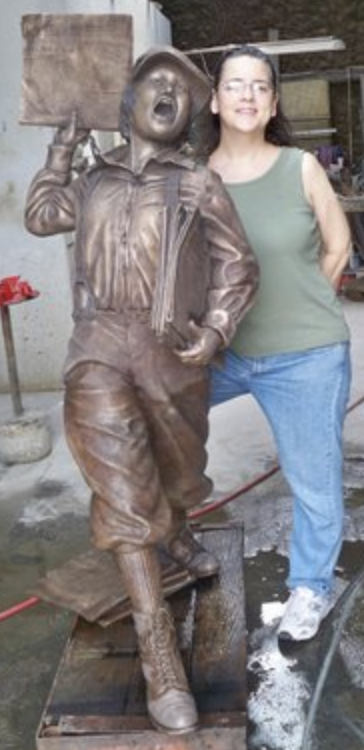
July 21, 2009
The Newsboy Will Ship in The Morning!
The sculpture for the Tri-City Herald ships to Kennewick, Washington. Of course the artist changed the paper.
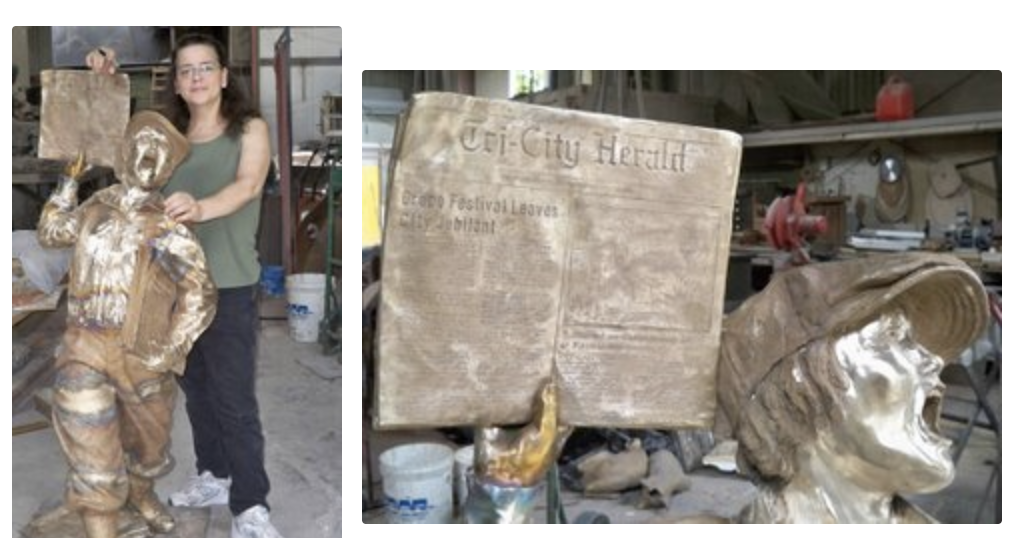
July 17, 2009
What is a Metal Check?
Sculptor Bridgette Mongeon travels to the foundry. She repeats what she has done so many times before.
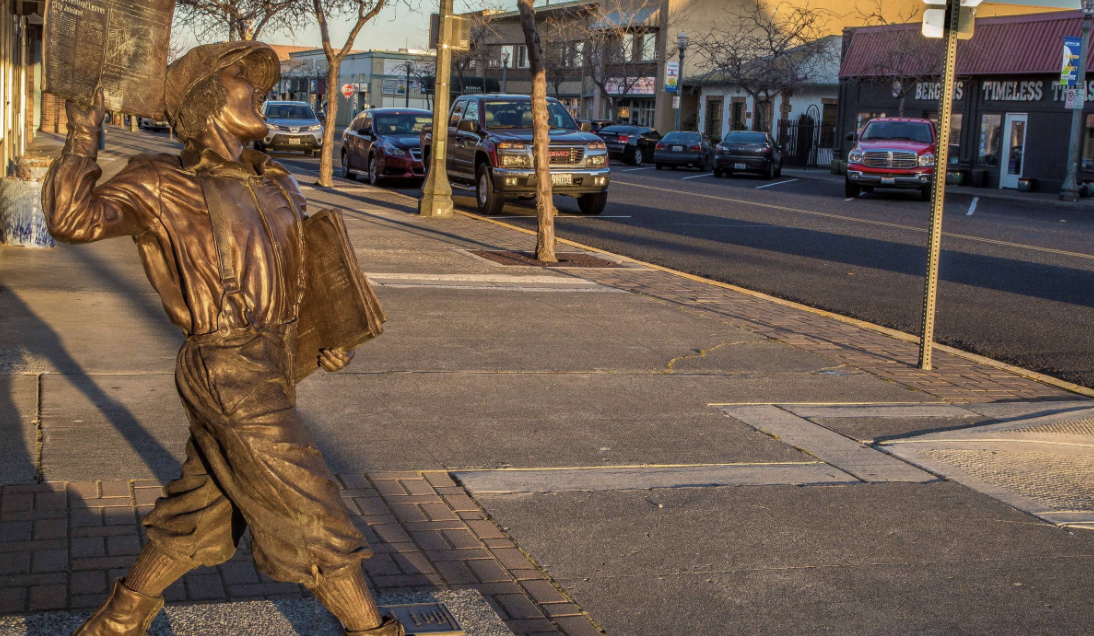
Sept 5, 2009
Recent Media on The Newsboy Sculpture
A Third Newsboy is Placed in Kennewick WA
September 5, 2009
Television Coverage of the Unveiling of the Newsboy Sculpture
Unfortunately the link was removed as of May 2020.
Television coverage of the unveiling of the Newsboy sculpture.
Here is a link to the television coverage on the Newsboy sculpture.